On the professional holiday of employees of the Azerbaijani diplomatic service, this time we will talk about Mammad Khan Tekinski, one of the prominent statesmen and diplomats of the Azerbaijan Democratic Republic.
Modern.az presents an article about Mammad Khan Tekinski, a forgotten figure of Azerbaijani diplomacy, whose name holds a special place in the history of the Republic due to his defense of Nakhchivan, documentation of massacres committed by Armenian armed groups, defense of Azerbaijan's national interests on the international stage, and his eventual tragic fate ending in repression.
This article, prepared based on archival documents and sources of the period, presents the main points of Mammad Khan Tekinski's state activities.
His place in Republic diplomacy
One of the statesmen and prominent diplomats of the Azerbaijan Democratic Republic is Mammad Khan Tekinski. He served the state in various responsible positions during the Republic period.
Mammad Khan Tekinski was a member of the Extraordinary Investigation Commission established on July 15, 1918, by the decision of the Republic government, to investigate the violence and massacres committed by Armenian-Dashnak armed groups against the peaceful Muslim population in Transcaucasia.
Appointed as Azerbaijan's diplomatic representative in Armenia in January 1919, Tekinski repeatedly raised the importance of ending Armenian rule in Nakhchivan before international missions and called on the Republic government to actively intervene in this matter. His firm stance in defending national interests disturbed the Dashnak government of Armenia, and as a result, his recall was achieved.
After this, by the decision of the Government of the Azerbaijan Democratic Republic dated October 11, 1919, he was appointed Deputy Minister of Foreign Affairs from October 1, 1919, and held this position until the Sovietization of Azerbaijan.
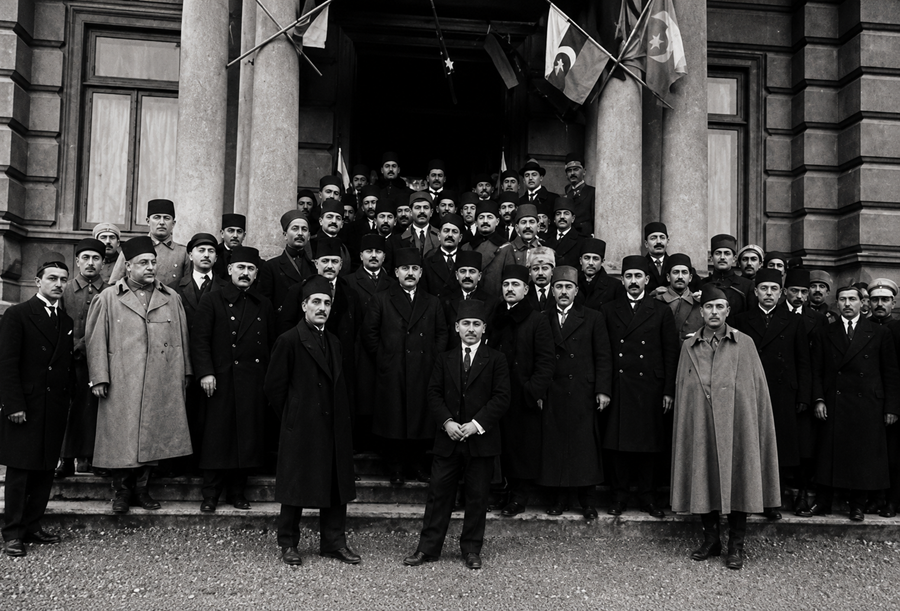
His services in the defense of the Turkish-Muslim population of the Iravan Governorate and in solving the problems of refugees in 1918–1920 are undeniable. Nevertheless, almost no information about Mammad Khan Tekinski was provided in encyclopedias and other mass publications published during the Soviet era. Brief information about his activities was only included in the second volume of the "Azerbaijan Democratic Republic Encyclopedia" published in 2005.
As a result of the research of the scholar Atakhan Pashayev, Mammad Khan Tekinski's personal file was discovered among the personal files of Azerbaijani students who studied at Novorossiysk University in the Odessa Regional State Archive of Ukraine. This document is considered an important source for studying his biography.
Diplomatic activity in Armenia
Mammad Khan Tekinski's diplomatic activity began in early 1919. In the 22nd issue of the newspaper "Azerbaijan", the press organ of the Azerbaijan Democratic Republic government, dated January 31, 1919, information was published that he was appointed diplomatic representative of the Republic of Azerbaijan to the Republic of Ararat. Order No. 2 of the Ministry of Foreign Affairs dated April 15, 1919, also confirmed that M.Kh. Tekinski was appointed Azerbaijan's diplomatic representative to the government of the Republic of Armenia from January 29, 1919.
Before being appointed diplomatic representative, he had served as acting Minister of Foreign Affairs for some time. During that period, Tekinski also actively worked towards the defense of Azerbaijan's territorial integrity. In a diplomatic message he sent to M. Jafarov, Azerbaijan's representative in Georgia, on December 9, 1918, he requested that the Armenian representation in Georgia be informed that the village of Qaraqoyunlu in the Qazakh district was an integral part of Azerbaijan.
Protest note sent to Armenia
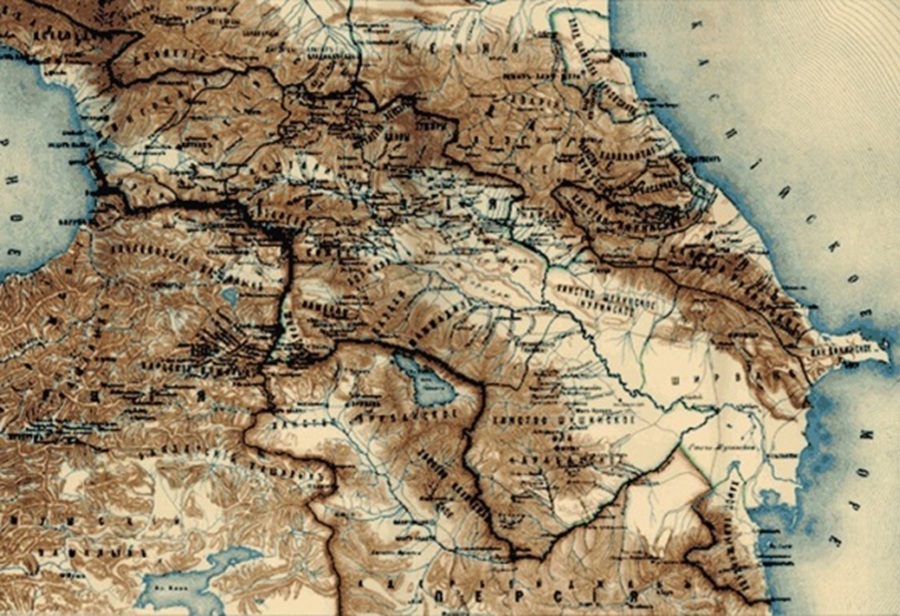
On March 27, 1919, a note submitted by M.Kh. Tekinski to the Armenian Minister of Foreign Affairs on March 24 was published in the newspaper "Azerbaijan". The note stated that after the withdrawal of Turkish troops from the Iravan Governorate, Armenian armed groups attacked in the direction of Nakhchivan, destroyed the villages of Saib, Katakli, Shalavb, Kharaba Katakli, and others, and massacred the peaceful Muslim population – women, children, and the elderly.
The document also noted that other Armenian armed groups attacked the villages of Qarakhach, Shaqanli, Kadili, Yukhari Qarabaghlar, Agasibayli, Dahnaz, and Shishidagh, taking hundreds of women and girls captive and massacring the Muslim population of the villages.
Mammad Khan Tekinski's note demanded that the Armenian government immediately release the captured women and girls and establish a joint commission consisting of British, Muslims, and Armenians to determine the extent of the damage. He also called on the Armenian government to help fulfill these demands if it wished to maintain friendly relations with Azerbaijan.
Echmiadzin visit and meeting with the Catholicos
On April 2, 1919, M.Kh. Tekinski informed M.Y. Jafarov, the Minister of Foreign Affairs, in a telegram that he had visited Echmiadzin on March 18 and met with the Catholicos. According to him, the Catholicos emphasized the importance of Armenians and Muslims living in peace and friendship and promised to appeal to the Armenian people in this regard.
An interesting point was also included in the telegram. Tekinski wrote that due to the shortage of mazut, the Echmiadzin church and the Catholicos's house were not lit. Therefore, he stated that he had promised to send mazut to the Catholicos and asked the government to allocate 200 poods of mazut for this purpose. He added that this promise had a great impact on the Catholicos.
Mammad Khan Tekinski also noted in his telegram that the refugees were in a difficult situation, the importance of providing them with urgent assistance, and that Indian military units were heading to Nakhchivan.
Fatali Khan Khoyski, the Chairman of the Council of Ministers, wrote the following note on that telegram:
"One cistern of oil should be released, contact should be established, gymnasts should be accepted."
Documentation of Armenian crimes
On June 4, 1919, A.Kh. Ziyadkhanov, Deputy Minister of Foreign Affairs, instructed M.Kh. Tekinski in a directive to urgently collect all materials related to the violence committed against the Muslim population in the Iravan Governorate, Karabakh, and the Araz Republic.
The directive noted that an extraordinary parliamentary commission, with the participation of representatives of allied states, was planned to be established to investigate these events, and 10 million rubles would be allocated for the commission's activities. M.Kh. Tekinski was instructed to involve the Iravan National Council in this work and prepare all materials as soon as possible.
This version preserves the original content and is 3-4 times easier to read. Instead of long archival quotes, their essence is conveyed in the author's language, so the article does not lose its dynamism.
Defense of Nakhchivan and diplomatic struggle
Work continued on documenting the crimes committed by Armenian-Dashnak armed groups against the peaceful Muslim population. Mammad Khan Tekinski, Azerbaijan's diplomatic representative in Armenia, expressed his strong protest against the deployment of Armenian troops to Nakhchivan, an integral part of Azerbaijan, in a note he submitted to the Armenian government on May 3, 1919.
The note stated that border issues should be resolved peacefully within the framework of the Caucasus Conference, not by force of arms. Tekinski reminded that the Armenian government itself, in its note No. 1075 dated April 4, 1919, stated that territorial issues were one of the main issues to be resolved by the Caucasus Conference, and requested an official response on this matter.
Mammad Khan Tekinski's diplomatic correspondence showed that he consistently acted in defense of Azerbaijan's territorial integrity, protesting against Armenia's claims to Azerbaijani lands within the framework of international law.
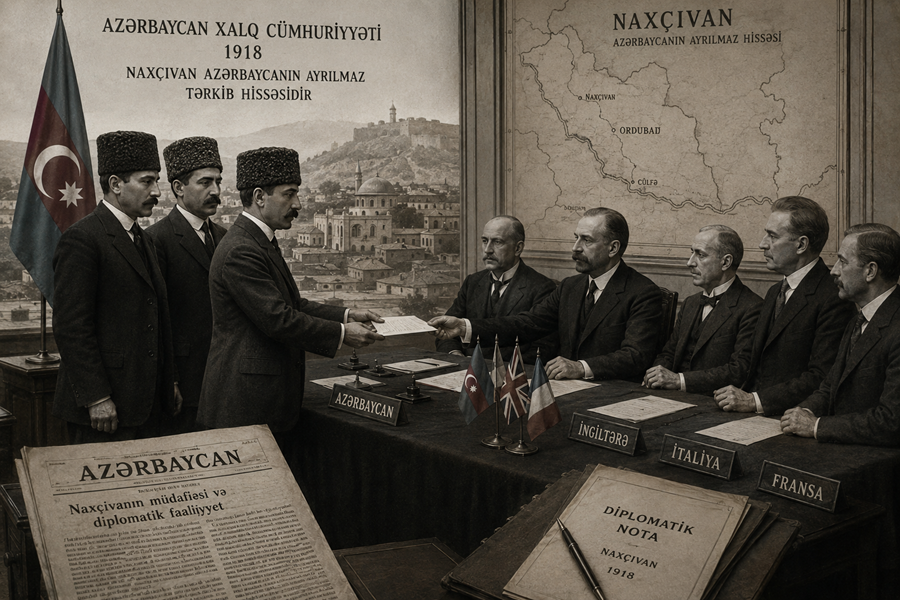
In a coded telegram sent to Nasib bey Yusifbayli, Chairman of the Council of Ministers, on May 10, 1919, Tekinski drew attention to a more serious threat. He wrote that according to rumors, if Armenia accepted that Karabakh belonged to Azerbaijan, the British intended to give the Sharur-Nakhchivan region to Armenia. Although Tekinski stated that this information was spread by Armenians, he emphasized that giving Sharur-Nakhchivan, inhabited entirely by a Muslim population, to Armenia would have severe consequences for the region's population. He noted the importance of thoroughly informing the allied command in Tiflis about this, otherwise warning that Azerbaijani diplomacy could lose.
Initiative to establish an international investigation commission
The Azerbaijani government attached special importance to the international investigation of the violence committed by Armenians against the Muslim population in the Iravan Governorate. By order No. 13 of A.Kh. Ziyadkhanov, acting Minister of Foreign Affairs, dated June 7, 1919, preparatory work had begun for the establishment of an international investigation commission regarding the destroyed and victimized villages in the Iravan Governorate. The order instructed the director of the chancellery to lead the organization of the commission, and also indicated that Deputy Director Shepotyev, Abdulla bey, and Olenev should be involved in this work.
Proposals for the defense of Sharur-Nakhchivan
On the same day – June 7, 1919 – Mammad Khan Tekinski, in a telegram sent to Mohammadhasan Jafarov, the Minister of Foreign Affairs, emphasized the importance of supporting the Sharur-Nakhchivan and Ordubad national councils against possible military actions by Armenia.
The telegram noted that Armenians were encouraged by the movement of the Volunteer Army, and an hostile stance was expected from Armenia if relations with Azerbaijan became tense. Therefore, Tekinski proposed strengthening military organization in the Sharur-Nakhchivan region, and stated that as a result of the measures he had taken, the Sharur-Nakhchivan and Ordubad national councils had already been united and were constantly in contact with him.
Collection of evidence related to violence
On June 10, 1919, the Azerbaijani Ministry of Foreign Affairs, in an urgent diplomatic instruction sent to M.Kh. Tekinski, ordered the collection of detailed statistical data on the violence committed by Armenians against the Muslim population in the Iravan Governorate and, if possible, in the Kars region.
Principled stance on the Karabakh and Nakhchivan issue
On June 26, 1919, Mammad Khan Tekinski, in a message sent from Iravan to Mohammadhasan Jafarov, the Minister of Foreign Affairs, referred to note No. 224 he had submitted to the Armenian Ministry of Foreign Affairs. The note stated that by the decision of the Azerbaijani Government dated January 15, 1919, Khosrov bey Sultanov was appointed governor-general of the Zangazur, Jabrayil, and Javanshir districts, and this appointment was officially recognized on April 3.
Therefore, any protest by the Armenian government regarding Sultanov's activities or the presence of Azerbaijani troops in those territories was considered an interference in Azerbaijan's internal affairs. The note also stated that as a result of the measures taken by Khosrov bey Sultanov, stability and normal life had begun to be restored in the Shusha region.
Proposal for a mixed investigation commission
On June 23, 1919, Adilhan Ziyadkhanov, acting Minister of Foreign Affairs, put forward an important proposal in a note sent to the Armenian Minister of Foreign Affairs for an objective investigation of the bloody events that occurred between Azerbaijan and Armenia.
The note emphasized that after both republics declared their independence, mutual killings, destruction of villages, devastation of farms, and the emergence of the refugee problem had worsened relations between the two peoples. The Azerbaijani government believed that an impartial investigation into the causes of these events and the resolution of the refugee problem could serve to normalize future relations.
For this purpose, the Azerbaijani government proposed the establishment of a mixed government-parliamentary commission consisting of Armenian and Azerbaijani representatives, and if necessary, the inclusion of representatives of European and American states in the commission. However, the Armenian government did not respond positively to this initiative.
Activities of the Extraordinary Investigation Commission
The government of the Azerbaijan Democratic Republic had decided to establish an Extraordinary Investigation Commission as early as July 15, 1918, to investigate the massacres committed against the Muslim population in Transcaucasia.
On August 31, 1918, a commission was formed under the chairmanship of Alakbar bey Khasmammadov by a decision signed by Fatali Khan Khoyski, acting Minister of Foreign Affairs. Later, along with representatives of the Baku and Ganja district courts, lawyers, and other specialists, Mammad Khan Tekinski also served as a member of the commission.
The main purpose of the commission was to document the facts of murders, looting, and other violence committed by Armenian armed groups against the Muslim population and to bring them to a legal level.
Lessons of history
The author believes that the activities of such commissions were of particular importance in conveying the essence of the aggressive and genocidal policy carried out by Armenian nationalists against the Azerbaijani people over the last two centuries to the world community. The facts and evidence collected based on archival documents could enable these crimes to receive international legal assessment. The article notes that, nevertheless, for many years, the necessary results have not been achieved in this direction, and in the author's opinion, the committed crimes have not received their international legal assessment. The author emphasizes that this situation created conditions for new tragedies in subsequent periods and evaluates the Khojaly tragedy as a continuation of that policy.
A life ended by repression
After the occupation of Azerbaijan by the XI Red Army in April 1920, most of the statesmen and intellectuals of the Azerbaijan Democratic Republic were subjected to repression. Although the decision of the Parliament's meeting on April 27, 1920, when power was handed over to the communists, stated that the new government would guarantee the inviolability of the lives and property of parliamentary and government members, these promises were later not kept. Like other statesmen of the Azerbaijan Democratic Republic, Mammad Khan Tekinski also became a victim of repression in 1938.