The initiation of credit-based doctoral training within the SABAH program for the first time in Azerbaijan is a significant, progressive, and innovative step for the country's scientific and academic environment. This initiative aims to accelerate the integration of higher education with scientific activity, as well as to attract competitive and potential young personnel to the scientific environment in accordance with international standards.
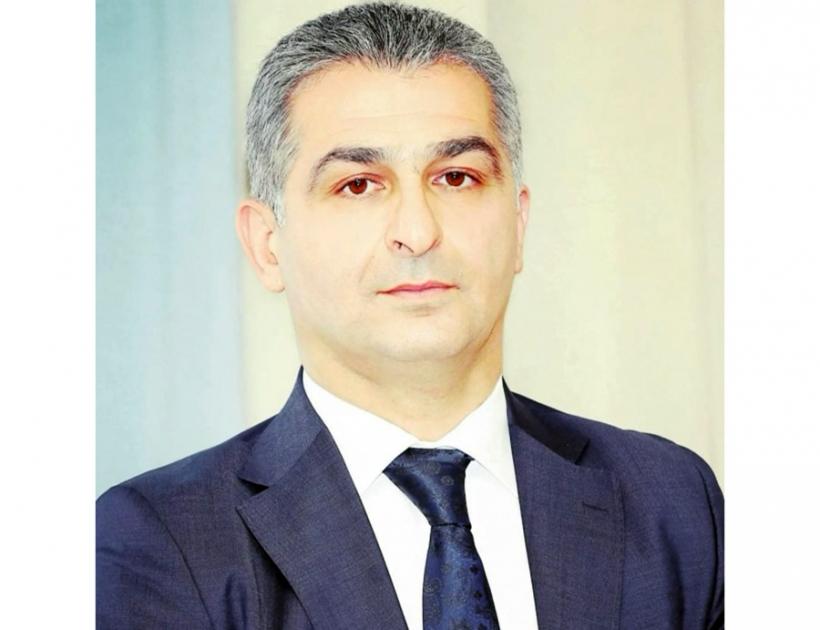
These views were expressed by Ilgar Orujov, Chairman of the Society of Doctoral and Master Students, in a statement to Modern.az.
According to him, the SABAH doctoral program is a flexible response to the need for structural changes that have existed in the Azerbaijani scientific and academic environment for many years:
“This is a pilot project, and its implementation in leading scientific institutions, in fundamental disciplines, indicates that the process is strategically planned. The traditional doctoral system is mostly a continuation of the postgraduate model inherited from the Soviet era. The SABAH doctoral model, however, is based on the principles of the European higher education area. In this regard, the program will serve to renew the scientific environment and adapt it to international standards.”
The expert noted that one of the main differences between the traditional doctorate and the new model is related to the structure. In the traditional system, a doctoral student primarily conducts independent research and works on a dissertation from day one. In the new model, the first two years involve intensive teaching and research, and the last two years are more focused on research.
“In the traditional doctoral system, there is no credit mechanism; mainly minimum exams and defense act as the main conditions. In the SABAH doctoral model, there is a credit-based approach, methodology, and structured teaching of subjects. This will systematically shape the scientific preparation of doctoral students,” he emphasized.
According to the expert, in the previous model, doctoral students sometimes worked outside the scientific institution, and scientific activity took a back seat. This could lead to formality in the process. In the new model, ensuring the doctoral student's official employment in a scientific-pedagogical direction allows for closer integration into the scientific environment.
I. Orujov stated that one of the important advantages of the SABAH doctoral program is the systematic teaching of areas such as academic writing, research methodology, and scientific ethics:
“Today, many doctoral students face difficulties with research methodology and academic writing. Including these issues in the curriculum of the new model will increase the scientific quality of dissertations. At the same time, it will positively impact the reduction of plagiarism and methodological errors. Doctoral students will gain the ability to write articles in accordance with the requirements of internationally indexed journals.”
In addition, the expert noted that the program also has certain risks. According to him, in the first two years, participating in classes, preparing for exams, and simultaneously conducting laboratory, archive, library, and field research can create a serious burden for doctoral students.
“The main issue here is proper time management. If the teaching rules are excessively theoretical and bureaucratic, this can delay doctoral students from focusing on fundamental research topics. Therefore, the program should be flexible, practical, and research-oriented,” the expert added.
I. Orujov also stated that the high-value SABAH scholarship will play an important role in increasing young people's interest in science:
“One of the main reasons young people move away from doctoral studies is financial uncertainty. To cover living expenses, many young researchers turn to additional jobs or the private sector. State scholarships, additional SABAH scholarships, and official salaries can reduce their financial worries and create conditions for them to focus on science.”
The expert believes that while financial security is important, a healthy scientific ecosystem must be formed for successful results. This ecosystem includes a quality scientific environment, modern infrastructure, international mentorship, a transparent defense process, and strong academic supervision.
“Especially in fundamental fields such as physics, chemistry, and biology, a high scholarship alone is not enough. Young researchers must have access to laboratory facilities, international scientific connections, strong scientific leadership, and a real research environment. Otherwise, financial motivation alone may not yield the expected results.”
For information, it should be noted that starting this year, for the first time in Azerbaijan, doctoral training within the SABAH program will be launched. Thus, in the initial stage, the program will be implemented in 4 educational institutions - the Institute of Education of the Republic of Azerbaijan, Baku State University, Azerbaijan State Oil and Industry University, and Baku Higher Oil School. Within the framework of the project, 80 doctoral students are planned to be trained in 7 scientific fields, including mathematics, physics, chemistry, biology, earth sciences, technical sciences, and pedagogy.
In addition, the duration of education will be a minimum of 4 years. The first 2 years will be dedicated to teaching and research, and the next 2 years will be solely for scientific research activities.